A proper bowl of chocolate chip cookie dough that you can actually eat. No tiny servings, no ridiculous calorie counts and absolutely no need to share.
I have a bit of a weakness for cookie dough. There is something about eating it straight from the bowl that feels far more indulgent than eating an actual cookie. And if I’m being honest, sometimes I’d rather skip the cookie altogether and just eat the dough.
The problem is that when I started looking at some of the so-called “healthy” protein cookie dough recipes online, I noticed something rather interesting. A lot of them are made with ingredients such as almond flour, almond butter, maple syrup and generous amounts of chocolate chips. There’s absolutely nothing wrong with these ingredients, but put them together and the calorie count for the entire bowl can easily creep over 1,000 calories.
Then comes the clever bit: the recipe is divided into five, six or even eight servings.
Suddenly, that enormous bowl of cookie dough looks wonderfully reasonable on paper. But let’s be honest. When has one-fifth of a bowl of cookie dough ever been enough?
If I’m making cookie dough, I want a proper serving. I don’t want two tablespoons, followed by the sad realisation that the rest is sitting in the fridge waiting for me. And I certainly don’t want to spend the next hour negotiating with myself about whether I can have another spoonful.
So I decided to make my own version. I wanted something that was genuinely high in protein, relatively low in calories, tasted like a treat and, most importantly, could be eaten as one generous serving.
The result is this Vanilla Chocolate Chip Protein Cookie Dough, which comes in at approximately 330 calories, 33g protein and 13g fibre for the ENTIRE bowl.
Yes, the entire bowl. No dividing it into five portions. No saving some for tomorrow. No pretending that a couple of spoonfuls will satisfy a cookie dough craving.
You’re welcome.
Why you’ll love this high-protein cookie dough
There are plenty of reasons to love this recipe, but the biggest one is that it doesn’t ask you to compromise on the serving size just to keep the calories down.
The entire recipe contains approximately 330 calories, which makes it a really useful option if you’re trying to keep your overall calorie intake in check while still enjoying foods that feel indulgent. You’re also getting 33g of protein and 13g of fibre, making it considerably more substantial than your average sweet snack.
I also love that it requires no baking. You simply mix the ingredients together, pop the bowl into the fridge and let it do its thing. In fact, I think it tastes even better when made the night before.
But perhaps my favourite thing about this recipe is how versatile it is. You can have it for breakfast, enjoy it as an afternoon snack when the sweet cravings strike, or keep it for after dinner when you fancy something chocolatey.
And unlike many of the other protein cookie dough recipes I’ve come across, you don’t have to convince yourself that one-fifth of a batch is a satisfying portion.
The secret to keeping the calories down
I’m not against almond butter, almond flour or maple syrup. They’re perfectly good ingredients and can absolutely form part of a balanced diet. However, they are relatively calorie-dense, and using generous amounts of them can make a supposedly healthy cookie dough surprisingly high in calories.
That’s why I’ve taken a slightly different approach.
Instead of relying on large quantities of nut butter and other calorie-dense ingredients, this recipe uses protein powder, oat flour and Greek yoghurt to create the texture and nutritional profile.
The result is a much lighter recipe that still gives you a proper bowl of cookie dough.
And here’s my little rule: if you’re going to make cookie dough, make enough to actually enjoy it.
The ingredients and why they work
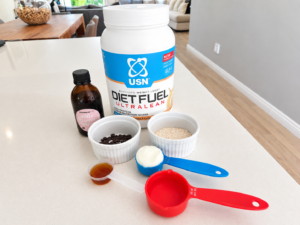
There aren’t many ingredients in this recipe, but each one plays an important role. I’ve also made a few adjustments after testing different combinations, particularly when it comes to the yoghurt, salt and sweetness.
USN Diet Fuel Ultra Lean Vanilla Protein Powder
This is the main ingredient and the biggest contributor to the protein content. I’ve been using USN Diet Fuel Ultra Lean Vanilla, and I really enjoy the flavour in this recipe.
According to the nutritional information on my tub, a 45g serving provides 134 calories and 26.2g of protein. It also contains dietary fibre, vitamins and minerals, as well as additional ingredients such as prebiotic fibre, L-carnitine and Garcinia cambogia.
One thing I particularly like about this protein powder is that it already has a lovely vanilla flavour and a slight salty note. I’ve actually found that I don’t need to add any extra salt when using it.
However, this is where you need to pay attention to your own protein powder. Different brands have different flavour profiles, sweetness levels and textures. If yours doesn’t have that slightly salty flavour, you might find that adding a tiny pinch of salt improves the finished cookie dough.
My biggest recommendation is to use a protein powder you genuinely enjoy. This recipe relies quite heavily on it for flavour, so if you don’t like drinking your vanilla protein shake, you probably won’t magically love it in cookie dough.
I’m also going to do a separate review of USN Diet Fuel Ultra Lean because I think the additional ingredients deserve a closer look. I’ll cover the prebiotic fibre, L-carnitine and Garcinia cambogia, including what the research actually says about their potential benefits.
Oat Flour
Oat flour is what gives this recipe its cookie dough structure. It provides that slightly floury, soft texture that you associate with traditional cookie dough, while also contributing carbohydrates and fibre.
More importantly, oat flour absorbs moisture as the mixture sits in the fridge. This is what helps transform the initial soft batter into a thicker, more scoopable cookie dough.
I use 20g/60ml, which is enough to give the mixture some body without adding unnecessary calories. You can make your own oat flour by blending ordinary oats until they become a fine powder, so there’s no need to buy a separate product if you already have oats in the cupboard.
Low-Free Greek Yoghurt
This is one of my favourite ingredients in the recipe because it adds creaminess without contributing a huge amount of calories.
The yoghurt helps create a softer, richer texture and balances the slightly powdery consistency that protein powder can sometimes produce.
Now, here’s something I’ve discovered while testing the recipe: adding a little extra yoghurt makes it even better.
I find that an additional spoonful gives the cookie dough a creamier, more indulgent consistency. It also helps take away that slightly dry or powdery feeling that some protein powders can leave behind.
Because we’re using low-fat or fat-free Greek yoghurt, adding a little extra doesn’t dramatically change the calorie count. Of course, calories aren’t completely free just because an ingredient is low-fat, but an extra 10–15ml is a relatively small addition.
My advice? Start with the recipe as written, then add a little more yoghurt if you prefer a creamier, softer cookie dough. You might find that you like it even more than the original version.
Vanilla Extract
We’re making vanilla chocolate chip cookie dough, so vanilla is rather important.
Although the protein powder already provides the main vanilla flavour, I find that adding vanilla extract gives the finished recipe a more rounded, dessert-like taste. It helps take the flavour away from a standard protein mixture and closer to something that resembles actual cookie dough.
Sugar-free Chocolate Chips
Now we’re getting to the important stuff.
I’ve used 1 tablespoon of sugar-free chocolate chips, which gives you little pockets of chocolate throughout the cookie dough without adding a huge amount of calories.
But let’s have a little chat about measuring chocolate chips.
I’ve put 1 tablespoon in the recipe because that’s what I’ve used to calculate the nutritional information. However, if you find yourself standing in the kitchen carefully measuring every last chocolate chip, I have a question: are we really living?
If your heart desires a little extra chocolate, throw some in. Life is short, and we’re making cookie dough, not performing surgery.
Just remember that adding more chocolate will increase the calories slightly, so the 330-calorie nutritional calculation applies to the original quantity.
Sugar-Free Maple Syrup: Optional
This is one ingredient I initially included, but after playing around with the recipe, I’ve found that I don’t actually need it when using my USN Diet Fuel Vanilla.
The protein powder already provides enough sweetness for my taste, so I prefer leaving the syrup out.
However, different protein powders can taste quite different. Some are less sweet than others, and some don’t have the same rounded vanilla flavour.
My recommendation is to make the recipe without the maple syrup first. Taste the mixture before adding anything extra. If you feel it needs a little more sweetness, add 5ml of sugar-free maple syrup and mix again.
You can also use your preferred calorie-free sweetener if you don’t have sugar-free maple syrup.
There’s no need to add sweetness just because it’s listed in someone else’s recipe. Let your protein powder do some of the work!
Salt: Do You Actually Need It?
Originally, I included a pinch of salt in the ingredients, but after testing the recipe several times, I’ve decided that it isn’t necessary when using my USN Diet Fuel Vanilla.
The protein powder already has a slight salty flavour, which balances the sweetness beautifully.
However, if you’re using a different protein powder and find that the cookie dough tastes a little flat, try adding a tiny pinch. Salt can make a surprising difference to the overall flavour.
In other words, don’t automatically add it. Taste first.
The most important part: Let it chill!
If there’s one instruction I really want you to follow, it’s this one.
Do not judge this recipe immediately after mixing it.
When you first combine all the ingredients, the mixture will look much softer than traditional cookie dough. Depending on your protein powder, it might even resemble a thick cake batter.
Don’t panic. That’s exactly what we want at this stage.
The oat flour and protein powder need time to absorb the liquid. As the mixture sits in the fridge, it gradually thickens and develops that dense, creamy, scoopable texture that makes it feel much more like cookie dough.
I recommend leaving it in the fridge for at least four hours. Overnight is even better.
I know waiting four hours to eat cookie dough sounds like an unreasonable request, but it genuinely makes a difference. If you want the best texture, make it in the evening and leave it in the fridge overnight. You’ll have breakfast ready and waiting for you the following morning.
If you absolutely cannot wait, you can eat it straight away. It will still taste good, but expect a softer, more batter-like consistency. You can also pop it into the freezer for a short period to speed up the chilling process, although I find the fridge gives the best result.
How to make the perfect high protein cookie dough
The method is simple, but there are a few little details that make a big difference to the finished texture. In particular, I recommend adding the water gradually and allowing the mixture to rest before deciding whether it needs more liquid.
Step 1: Combine the protein powder and oat flour.
Start by adding the USN Diet Fuel Vanilla protein powder and oat flour to a mixing bowl. Stir them together until evenly combined. Breaking up any lumps at this stage will make it easier to achieve a smooth mixture later.
Step 2: Add the yoghurt and vanilla.
Add the Greek yoghurt and vanilla extract to the dry ingredients. Mix everything together using a spoon or small spatula. The mixture will initially look quite thick and may seem a little difficult to combine, but don’t worry. We’re going to add the water next.
Step 3: Add the water gradually.
Start with approximately 40ml of cold water and mix thoroughly. Add a little more if necessary until you have a thick, smooth batter.
I wouldn’t pour all the water in at once because different protein powders absorb liquid differently. You may find that you need the full 50ml, or you may find that 40ml is enough.
At this point, the mixture should be softer than the cookie dough you’re ultimately aiming for. Remember, the oat flour and protein powder will continue absorbing moisture as the mixture chills.
Step 4: Taste and adjust the sweetness.
This is where I recommend tasting the mixture before adding the sugar-free maple syrup or any additional sweetener.
If your protein powder is already sufficiently sweet, leave it out. If the mixture tastes a little bland or you prefer a sweeter cookie dough, add 5ml of sugar-free maple syrup or your preferred sweetener.
The same applies to salt. If your protein powder already has a salty flavour, you probably won’t need any extra.
Step 5: Fold through the sugar-free chocolate chips.
Add the 1 tablespoon of chocolate chips and gently fold them through the mixture so that they’re evenly distributed.
And if you want to add a few extra chocolate chips, I’m certainly not going to stop you.
Step 6: Refrigerate for at least four hours.
Transfer the mixture into a small airtight container or cover your mixing bowl with cling film. Place it in the fridge for at least four hours, preferably overnight.
This is the most important step for achieving the right texture. As the mixture chills, the oat flour and protein powder absorb the moisture, making the dough thicker and more scoopable.
Step 7: Adjust the consistency and enjoy.
Once chilled, give the cookie dough a good stir. If it has become a little too thick, add a teaspoon of water or a little extra Greek yoghurt and mix until you reach your preferred consistency.
If you prefer a creamier, softer cookie dough, this is also a good time to add another spoonful of Greek yoghurt.
Then grab a spoon and enjoy the entire bowl. You’ve earned it.
When should you eat your high protein cookie dough?
I originally started making this because I wanted something sweet that wouldn’t take up a huge portion of my daily calorie allowance. However, I’ve found that it works for several different occasions.
For breakfast, it’s a fun alternative to overnight oats, particularly if you’re trying to get at least 30g of protein into your first meal. You’re getting 32g of protein and 12g of fibre, with a serving that feels much more like dessert than a traditional breakfast.
As an afternoon snack, it’s perfect for those moments when you start looking through the kitchen cupboards for something sweet. Rather than reaching for biscuits or chocolate and then wanting something else ten minutes later, you have a substantial snack waiting in the fridge.
As an evening treat, it is equally satisfying. I particularly like having it after dinner when I fancy something sweet. The combination of protein and fibre makes it a more substantial option than a handful of sweets or biscuits, and it helps me feel like I’ve actually had dessert.
How this cookie dough has helped with my own weight loss
I’ve recently lost 5kg of stubborn weight while also putting on muscle, which is something I’ve been working towards for a while.
I’m not going to claim that this cookie dough is responsible for that. My overall nutrition, keeping my protein intake high and my HYROX workouts have all played a much bigger role.
However, I do think recipes like this have made the process considerably easier.
One of the things I’ve struggled with when trying to eat in a calorie-conscious way is my sweet tooth. I don’t want to spend my life avoiding chocolate, desserts and all the foods I enjoy. I also don’t want to feel like I’m constantly depriving myself.
Having something in the fridge that tastes like a treat but still fits into my nutritional goals has made a real difference.
Instead of telling myself I can’t have cookie dough, I can have a whole bowl of it. And it just happens to contain 33g of protein.
For me, that’s a much more sustainable approach to healthy eating. It’s not about eating perfectly or eliminating everything you enjoy. It’s about finding ways to make your favourite foods work with your goals.
And if that means having cookie dough for breakfast, I’m perfectly happy with that.
The bottom line
I’m not interested in making a recipe that calls one-fifth of a bowl a serving just so the calories look good.
If I’m making cookie dough, I want to eat cookie dough. I want a proper serving, plenty of chocolate chips and the satisfaction of knowing that I haven’t just eaten two spoonfuls and left the rest staring at me from the fridge.
That’s what makes this recipe different.
For approximately 330 calories, you get a generous serving containing 33g of protein and 13g of fibre. You can enjoy it for breakfast, have it as an afternoon snack or save it for when your evening sweet cravings arrive.
And the best part? You don’t have to share.
One bowl, 330 calories and absolutely no regrets. That’s my kind of cookie dough.
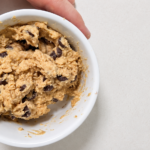
High-Protein Chocolate Chip Cookie Dough
Ingredients
- 45 g vanilla protein powder I used USN Diet Fuel Ultra Lean Vanilla protein powder
- 60 ml oat flour
- 60 ml fat-free Greek yoghurt
- 40-50 ml cold water added gradually
- 1 tbs sugar-free chocolate chips
- 5 ml vanilla extract
- 5 ml sugar-free maple syrup optional
Instructions
- Add the USN Diet Fuel Vanilla and oat flour to a bowl and mix well.
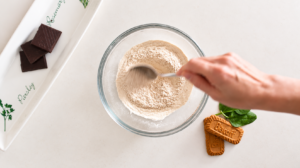
- Add the Greek yoghurt and vanilla extract, and stir to combine.
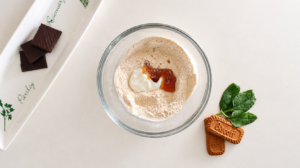
- Add 40ml of cold water and mix thoroughly. Gradually add more water, a little at a time, until you have a thick but smooth batter. You may not need the full 50ml.
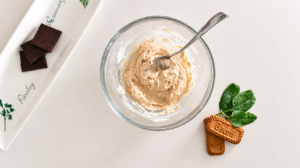
- Fold through the chocolate chips.
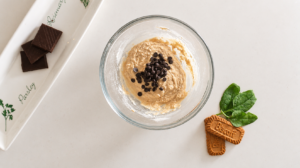
- Cover and refrigerate for at least four hours. For the best texture, leave it overnight.
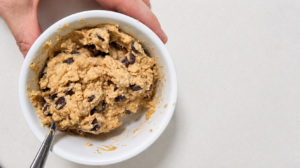
- Once chilled, stir the cookie dough. If it has become too thick, add a teaspoon or two of water and mix until you reach your preferred consistency.
- Serve cold and enjoy the entire bowl.
Notes
Nutrition per serving
- 330 calories
- 33g protein
- 24g carbohydrates
- 9g fat
- 13g fibre
- 7g sugar
High-Protein Cookie Dough FAQs
Can I eat this cookie dough straight away?
Yes, you absolutely can. However, the texture won’t be at its best immediately after mixing. It will be much softer and more like a thick cake batter than traditional cookie dough. I strongly recommend refrigerating it for at least four hours so that the oat flour and protein powder have time to absorb the liquid and thicken the mixture.
Why does the recipe need to chill for four hours?
The resting time is what gives this recipe its cookie-dough consistency. The oat flour and protein powder continue absorbing moisture while the mixture sits in the fridge. This gradually transforms the softer batter into a thicker, creamier and more scoopable dough. If you have the time, leaving it overnight is even better.
Is overnight refrigeration better?
I think so! Overnight refrigeration gives the ingredients plenty of time to hydrate and allows the flavours to develop. I particularly like making this in the evening because it means breakfast is already waiting for me the following morning.
What if I really want to eat it immediately?
Go for it! There is nothing wrong with eating it straight away. Just expect a softer, more batter-like consistency. If you’re desperate for a thicker texture, you can put it in the freezer for a short while to speed up the chilling process, but I still prefer the results from refrigerating it for several hours.
Can I use a different vanilla protein powder?
Absolutely. However, the protein powder has a big influence on the flavour, sweetness and texture of the finished recipe. Different powders absorb liquid differently, so you may need to adjust the amount of water. I recommend using a vanilla protein powder that you already enjoy drinking.
Do I have to use USN Diet Fuel Ultra Lean?
No. I use USN Diet Fuel Ultra Lean Vanilla because I enjoy the flavour and like its nutritional profile, but you can use another vanilla protein powder. Just remember that the nutritional values will change depending on the brand and serving size you use.
Do I need to add the sugar-free maple syrup?
Not necessarily. I’ve found that my USN Diet Fuel Vanilla provides enough sweetness, so I generally leave the maple syrup out. However, some protein powders are less sweet than others. My advice is to make the recipe without it first, taste the mixture and only add 5ml of sugar-free maple syrup if you feel it needs a little extra sweetness.
Do I need to add salt?
I don’t add salt when using my USN Diet Fuel Vanilla because the protein powder already has a slight salty flavour. However, if you’re using a different brand and find that the cookie dough tastes a little flat, try adding a tiny pinch. Always taste first rather than automatically adding it.
Can I add more Greek yoghurt?
Yes! This is actually one of my favourite adjustments. I’ve found that adding an extra spoonful of Greek yoghurt makes the cookie dough creamier and gives it an even more indulgent texture. Because we’re using fat-free or low-fat Greek yoghurt, a little extra doesn’t add a huge number of calories. Start with an additional 10–15ml and adjust until you get the consistency you prefer. Just remember that any additional ingredients will change the nutritional values slightly.
Can I use full-fat Greek yoghurt?
Absolutely. Full-fat Greek yoghurt will make the cookie dough richer and creamier, but it will also increase the calorie and fat content. I use fat-free Greek yoghurt because it gives me the texture I want while keeping the calories relatively low.
Can I add more chocolate chips?
Of course! The recipe uses 10g of mini chocolate chips for the nutritional calculation, but you can add more if you prefer a particularly chocolatey cookie dough. And let’s be honest, if you’re struggling to measure exactly 10g of chocolate chips, perhaps it’s time to stop counting every last chip and enjoy your cookie dough. Just remember that extra chocolate means extra calories.
Can I make this cookie dough sweeter?
Yes. I recommend tasting the mixture before adding anything extra because many vanilla protein powders are already sweetened. If yours isn’t sweet enough, add a little sugar-free maple syrup or your preferred calorie-free sweetener until you reach the sweetness you like.
Is this suitable for breakfast?
I think it makes a brilliant breakfast option. It provides approximately 32g of protein and 12g of fibre for 302 calories, with oat flour contributing carbohydrates and fibre. If you’re aiming to get at least 30g of protein into your first meal of the day, this is a particularly easy and enjoyable way to do it. It’s essentially a very fun take on overnight oats.
Will this cookie dough help me lose weight?
No single recipe causes weight loss. Your overall energy balance, nutrition and activity levels are what matter. However, I find that having high-protein options that genuinely taste good makes it easier to manage sweet cravings and stick to my nutritional goals. For me, this recipe has been a useful part of a much bigger approach that includes high-protein eating and regular HYROX training.
How should I store the cookie dough?
Keep the cookie dough covered in an airtight container in the refrigerator. Because it contains Greek yoghurt, I recommend making a fresh serving and enjoying it within a couple of days, rather than preparing a large batch to keep for the week. Always use fresh ingredients and keep it refrigerated.