72g protein. 455 calories. Creamy, cheesy and absolutely no sad chicken breast and brown rice in sight.
I’ve been in a bit of a chicken phase lately. And honestly, I think chicken deserves a little more appreciation. It’s one of the easiest ways to get a serious amount of protein into your diet without adding a huge amount of calories, which makes it incredibly useful when you’re trying to hit a higher protein goal.
But there is a limit.
Plain chicken breast with brown rice is so last season.
If I’m going to eat chicken regularly, I want it to taste how I feel: FABULOUS.
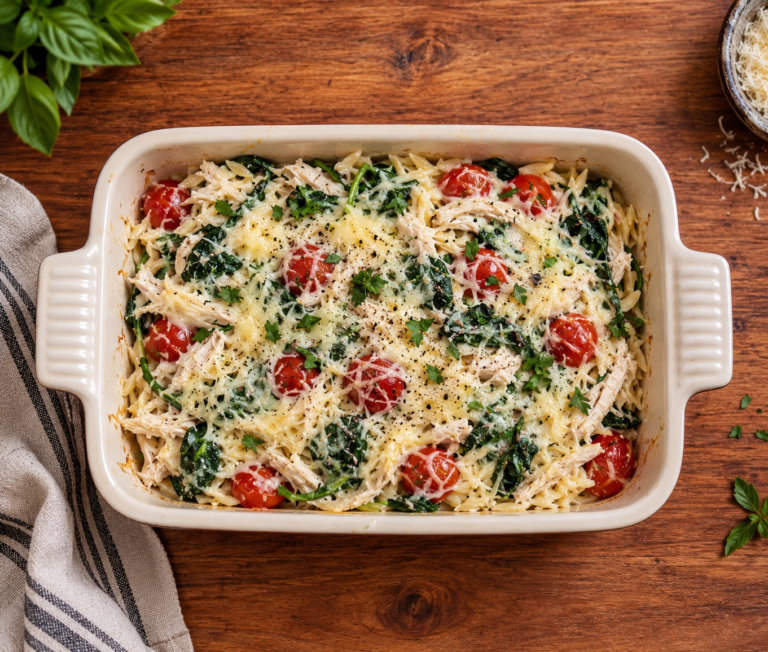
That’s exactly where this Creamy Chicken & Broccoli Bake comes in. It’s rich, creamy, garlicky and cheesy, but it’s still made with ingredients that give you plenty of nutritional bang for your buck. Each serving contains an impressive 72g of protein, while still coming in at 455 calories.
And no, before you ask, this isn’t a one-pan meal. There are a couple of extra steps involved, but they’re steps I genuinely think are worth taking. Browning the chicken and roasting the broccoli first is what takes this from “healthy chicken bake” to something that actually tastes delicious.
Why you’ll love this chicken bake
What I particularly love about this recipe is that it doesn’t rely on loads of cream or cheese to make it taste indulgent. Instead, we’re using a few clever ingredients to create a sauce that is creamy, savoury and packed with protein.
The base is made from smooth cottage cheese and Greek yoghurt, which are blended together with garlic, Dijon mustard, Parmesan and chicken stock. Once everything is blended, the cottage cheese completely transforms into a smooth, creamy sauce. You’d never look at the finished dish and think, “Oh, that’s cottage cheese.”
Then we add beautifully browned chicken, roasted broccoli and a little mozzarella on top before everything goes into the oven to bubble away.
The result is comforting enough to feel like proper comfort food, while still being a meal you can feel really good about eating.
The powerhouse ingredients
Chicken: the protein powerhouse
There is a reason chicken features so heavily in my high-protein recipes. It’s incredibly protein-dense and versatile, which makes it one of the easiest ingredients to build a high-protein meal around.
For this recipe, I’m using 1kg of raw, skinless chicken breast. That sounds like a lot, but remember that the recipe makes four generous portions. Once cooked and divided between four servings, you’re getting a substantial amount of chicken in every bowl.
And we’re not just throwing the chicken into the baking dish raw. We’re going to brown it first. This creates that lovely golden colour and, more importantly, develops deeper savoury flavours that you simply don’t get from chicken that has only been baked.
Broccoli: don’t just boil it
Broccoli is one of those vegetables that can be absolutely delicious when it’s cooked properly — and completely forgettable when it’s not.
For this recipe, we roast the broccoli before adding it to the bake, and there is a very good reason for that.
When broccoli is roasted at a high temperature, the surface loses some of its moisture and the natural sugars in the vegetable begin to caramelise and brown. This creates those slightly crispy, golden edges and gives the broccoli a much deeper, nuttier flavour.
If you simply steam or boil the broccoli and then put it into the creamy sauce, you’re adding a lot more moisture to the dish. The broccoli can also become soft and watery, and that extra water can dilute the sauce.
Roasting it first gives you better texture, more flavour and a less watery bake.
It’s one of those tiny extra steps that makes a surprisingly big difference.
And nutritionally, broccoli brings plenty to the table too. It’s a great source of fibre and provides vitamin C, vitamin K and folate, making it a perfect partner for the protein-rich chicken.
Cottage cheese: the secret weapon
If you haven’t started using cottage cheese in your high-protein recipes yet, this is a good place to start.
I’m using 250g of fat-free smooth cottage cheese to create the creamy base of the sauce. Blending it completely smooth removes the lumpy texture and gives you a surprisingly luxurious sauce without needing loads of cream.
Cottage cheese is also an easy way to increase the protein content of a recipe without dramatically increasing the calories.
Combined with Greek yoghurt, Parmesan, garlic and Dijon, it becomes savoury, creamy and cheesy — rather than tasting like you’re trying to make a “healthy substitute.”
And that’s the goal here. I don’t want healthy food that tastes like a compromise.
How to make it
Start with the broccoli
Preheat your oven to 200°C and place the broccoli florets onto a baking tray.
Toss them with a little olive oil, salt and pepper, then roast for around 10–12 minutes. You want the broccoli to start developing some colour around the edges, but you don’t want it completely soft because it will continue cooking in the oven later.
This is the point where you’ll start to understand why we didn’t just throw raw broccoli into the casserole. Those browned edges add a lovely roasted flavour that carries through the finished dish.
Brown the chicken
While the broccoli is roasting, heat a large frying pan over medium-high heat.
Cut the chicken into bite-sized pieces and season it with garlic powder, smoked paprika, salt and pepper.
Because we’re using a full kilogram of chicken, don’t overcrowd the pan. Cook it in two or three batches if necessary. If you put too much chicken into the pan at once, it releases moisture and the temperature drops, meaning the chicken will steam instead of brown.
We’re not trying to cook the chicken completely at this point. We simply want to get some lovely golden colour on the outside. It will finish cooking in the oven.
Make the creamy sauce
This is the easy part.
Add the smooth cottage cheese, Greek yoghurt, water, chicken stock powder, Dijon mustard, garlic, onion powder, Italian herbs and Parmesan to a blender.
Blend until the mixture is completely smooth and creamy.
The sauce should taste savoury and well-seasoned at this stage. Remember that the chicken and broccoli will dilute the intensity slightly, so don’t be afraid of a well-seasoned sauce.
Bring everything together
Add the browned chicken and roasted broccoli to a large baking dish.
Pour over the creamy sauce and gently mix everything together so that every piece of chicken and broccoli is coated.
Then sprinkle the mozzarella evenly over the top.
Because we’re only using 40g of mozzarella, you’re not drowning the dish in cheese, but you still get that lovely melted, golden layer on top.
Bake until bubbly
Place the dish into your 200°C oven and bake for approximately 18–22 minutes, or until the sauce is bubbling, the cheese is melted and golden and the chicken is completely cooked through.
Once it comes out of the oven, let it rest for about five minutes before serving. This gives the sauce a chance to settle and thicken slightly.
What to serve with it
Honestly, this bake is substantial enough to serve on its own. With 72g of protein per serving, you’ve already got a seriously protein-rich dinner, and the broccoli provides your vegetable component.
If you’re after more carbohydrates, however, it works beautifully with roasted baby potatoes, a baked potato, rice or gluten-free pasta. If you’re keeping things lower-carb, serve it alongside a simple green salad, asparagus, green beans or roasted courgettes.
And if you’re looking for something a little more indulgent, a piece of crusty gluten-free bread alongside it is perfect for scooping up the creamy sauce. Because there is absolutely no reason to let that sauce go to waste.
Ingredient swaps
The recipe is quite flexible, so don’t worry if you don’t have every ingredient in the fridge.
Chicken breast: You can use skinless chicken thighs instead. They’ll give you a juicier, richer result, although the calorie and fat content will be higher.
Broccoli: Cauliflower, green beans, courgette, mushrooms or even spinach can work. If you’re using a firm vegetable like cauliflower, I’d roast it first for the same reason we roast the broccoli.
Cottage cheese: Regular cottage cheese will work perfectly well. Just blend it until completely smooth. The nutritional information will depend on the variety you use.
Greek yoghurt: Plain high-protein yoghurt can be substituted if that’s what you have available.
Mozzarella: Cheddar works if you prefer a stronger cheese flavour, but it will increase the fat and calorie content.
Parmesan: I’d try to keep the Parmesan if possible. We’re only using 20g, but it adds a huge amount of savoury, umami flavour to the sauce.
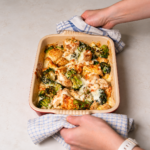
High-Protein Creamy Chicken & Broccoli Bake
Ingredients
- Chicken & broccoli:
- 1 kg raw, skinless chicken breast cut into bite-sized pieces
- 300 g broccoli florets
- 1 tsp olive oil
- salt & pepper to taste
- ½ tsp smoked paprika
- ½ tsp garlic powder
- Creamy sauce:
- 250 g fat-free smooth cottage cheese
- 100 g plain Greek yoghurt
- 100 ml water
- 2 tsp chicken stock powder
- 1 tsp Dijon mustard
- 2 cloves garlic minced
- ½ tsp onion powder
- ½ tsp dried Italian herbs
- 20 g Parmesan finely grated
- 40 g mozzarella grated
Instructions
1. Roast the Broccoli
- Preheat your oven to 200°C.
- Place the broccoli florets on a baking tray.
- Toss with ½ tsp of the olive oil, salt & pepper to taste.
- Don't skip the roasting step - it gives the broccoli much more flavour and helps prevent the finished bake from becoming watery.
2. Brown the chicken
- Heat the remaining ½ tsp olive oil in a large frying pan over medium-high heat.
- Season the chicken with a paprika, garlic powder, and a little salt and pepper.
- Because you're using 1kg of chicken, cook it in 2–3 batches rather than overcrowding the pan.
- Brown the chicken for around 3–5 minutes per batch, turning occasionally. You're looking for good colour on the outside rather than cooking it completely through.
- Transfer the browned chicken to a large baking dish.
3. Make the creamy protein sauce
- Make the creamy protein sauce by adding the following to a blender: -Cottage cheese-Greek yoghurt-100ml water-Chicken stock powder-Dijon mustard-Garlic-Onion powder-Italian herbs-Parmesan
- Blend until completely smooth and creamy.
- Taste and adjust the seasoning if needed.
4. Assemble
- Add the roasted broccoli to the baking dish with the chicken.
- Pour over the creamy cottage-cheese sauce and gently mix everything together, making sure the chicken and broccoli are well coated.
- Sprinkle the 40g grated mozzarella evenly over the top.
5. Bake
- Place the dish in the oven at 200°C.
- Bake for approximately 18–22 minutes, or until the sauce is bubbling, the mozzarella is melted and golden, and the chicken is completely cooked through.
- If you have a meat thermometer, the thickest pieces of chicken should reach 74°C.
6. Rest & serve
- Remove from the oven and let it rest for 5 minutes before serving.
- Finish with freshly cracked black pepper and a little fresh parsley if you have some.
Video
Notes
Frequently Asked Questions
Can I make this ahead of time?
Yes. You can prepare the chicken, broccoli and sauce, assemble the bake and keep it covered in the refrigerator until you’re ready to cook it. If you’re putting it into the oven straight from the fridge, allow a little extra cooking time.
Can I freeze it?
Yes, although creamy sauces can sometimes change texture slightly after freezing and reheating. Allow the bake to cool completely, portion it into airtight containers and freeze. Thaw overnight in the refrigerator before reheating.
Can I use frozen broccoli?
You can, but fresh broccoli will give you the best result. If you use frozen broccoli, thaw it completely and drain it very well before roasting. Excess water is the enemy of a creamy bake.
Why do I need to brown the broccoli first?
Because flavour.
Roasting the broccoli at high heat allows it to brown and caramelise, creating deeper, nuttier and slightly sweet flavours. It also removes some of the excess moisture, which means you’re less likely to end up with a watery sauce.
Boiled or steamed broccoli will work from a technical perspective, but roasted broccoli makes the finished dish significantly more flavourful.
Why do I need to brown the chicken first?
Browning creates much more flavour than simply cooking the chicken in the sauce. It gives the chicken a golden exterior and allows the Maillard reaction to develop those deep, savoury flavours.
It also means the chicken isn’t relying entirely on the sauce for flavour.
How do I prevent the chicken from becoming dry?
The most important thing is not to overcook it. You’re only browning the chicken in the frying pan initially, then allowing it to finish cooking in the oven.
Cutting the chicken into evenly sized pieces also helps everything cook at roughly the same rate.
Can I make this without mozzarella?
Absolutely. The Parmesan already gives the sauce plenty of cheesy flavour. You’ll simply lose that melted cheese topping.
Is this gluten-free?
The basic ingredients are naturally gluten-free, but if you need to strictly avoid gluten, always check the labels on your chicken stock powder, seasonings and other packaged ingredients.
How much protein is in each serving?
The recipe makes four servings, with approximately 72g protein, 455 calories, 10g carbohydrates and 12g fat per serving based on the ingredients and quantities used.